Why Your Leggings Fit Differently at 7am and 7pm (and Which Fit to Size For)
Quick Answer: Your body genuinely changes size through the day - most people measure up to 1cm larger at the waist and hips by evening due to normal fluid shift, sodium intake, and spinal compression. Size for the time of day you’ll actually wear the garment, and when in doubt, size for evening, since a slightly loose morning fit is far more comfortable than an evening fit that digs in.
You tried on leggings in the morning and they were perfect. That night they felt like a different garment. Nothing was wrong with the leggings, and nothing is wrong with you - here’s the actual mechanism, and how to use it to size better.

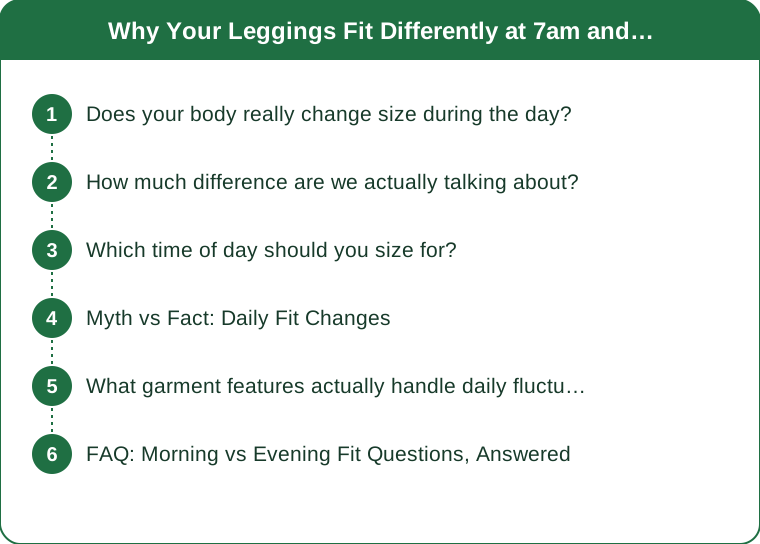
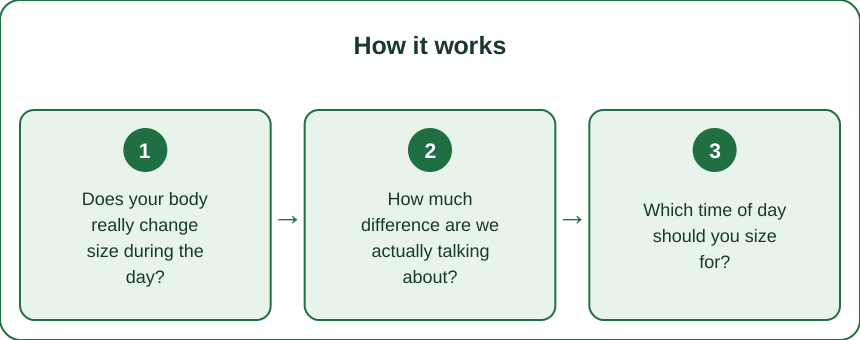
Does your body really change size during the day?
Yes, and the effect is bigger than most people assume. Three things are happening at once.
Fluid redistribution. After a night lying flat, fluid that pooled in your torso overnight moves downward once you’re upright. By evening, more fluid sits in your lower legs and lower abdomen than it did at 7am. This is normal circulation, not a problem.
Spinal compression. You’re measurably shorter at night - roughly 1-2cm - as the discs in your spine compress under a day of gravity. A shorter torso means a slightly different waistband position and a different rise measurement on the same body.
Digestion and sodium. A day of eating, particularly salty food, means more content and more water retention in the abdomen than a fasted morning state. This alone can account for several millimeters at the waist.
How much difference are we actually talking about?
For most people, the swing is 0.5cm to 1.5cm at the waist, with a smaller change at the hip and a slightly larger one at the calf and ankle by late evening.
That sounds trivial until you look at how activewear size charts are built. Many brands space their sizes only 4-5cm apart at the waist. A 1.5cm daily swing is close to a third of a full size gap - more than enough to move a garment from comfortable to digging in, especially at a high-rise waistband where there’s no give.
The effect is more noticeable in compression fabrics than in relaxed knits, because compression fabric has less recovery room built in. A relaxed jogger absorbs a 1cm change invisibly. A high-compression legging with a wide waistband makes you feel every millimeter of it.
Heat amplifies all of this. Late-summer humidity increases fluid retention for many people, which is why leggings that fit perfectly in April can feel one size tighter in August without a single pound changing.
Which time of day should you size for?
Size for when you’ll wear it. That’s the whole rule, and it’s more useful than any universal recommendation.
- Evening classes or after-work training: try on in the evening, or accept a slightly loose morning fit
- Early morning workouts: morning fitting is accurate
- All-day wear (travel, work-from-home, errands): size for evening, because that’s when discomfort becomes unbearable
When you genuinely can’t predict, default to the evening fit. The asymmetry matters: leggings that are slightly loose in the morning are mildly annoying, while leggings that dig in at 9pm are the reason a garment ends up unworn in a drawer.
For online orders where you can’t try on at all, take your measurements at both ends of the day, use the evening number against the size chart, and check the brand’s return window before you buy.

Myth vs Fact: Daily Fit Changes
Myth: If leggings feel tighter at night, they’ve shrunk in the wash. Fact: Wash shrinkage is permanent and shows up equally at every hour. A garment that fits in the morning and not at night hasn’t shrunk - your measurements moved.
Myth: Feeling tighter by evening means you’ve gained weight that day. Fact: Daily fluid and digestive shift is not fat gain. Actual body composition doesn’t change meaningfully over twelve hours; water distribution does, constantly.
Myth: Sizing up solves it. Fact: Sizing up fixes the evening but creates a sagging, sliding morning fit in compression fabrics. The better fix is choosing a fabric with more recovery, or a waistband design that accommodates change rather than fighting it.
Myth: This only happens to certain body types. Fact: Fluid shift, spinal compression, and digestion happen to everyone. What varies is how much of it you notice, which depends more on your garment’s fabric and rise than on your body.
What garment features actually handle daily fluctuation best?
If your measurements swing noticeably, some construction choices absorb it far better than others.
Wide, seamless waistbands distribute pressure over more surface area than a narrow band, so the same amount of change is felt less sharply. A 12-15cm band handles fluctuation better than a 5cm one.
Higher elastane content (usually 15-25% in performance blends) means more recovery - the fabric stretches to accommodate change and returns to shape rather than staying stretched out. Very low-elastane cotton blends feel comfortable but sag by evening.
Fold-over or drawcord waistbands give you an adjustment mechanism, which is the most direct solution available. They’re less streamlined under fitted tops, but for all-day wear the tradeoff usually favors adjustability.
Avoid rigid bonded panels at the waist if you fluctuate significantly - they don’t move with you, and they’re the most common source of the evening dig-in complaint.
FAQ: Morning vs Evening Fit Questions, Answered
Is a bigger difference between morning and evening a sign of a health problem?
Mild daily fluctuation is normal. Significant swelling in the legs, ankles, or hands that doesn’t resolve overnight is worth mentioning to a doctor. This is general information, not medical advice.
Does this affect sports bra sizing too?
Less than bottoms, but yes - rib cage measurement can shift slightly with fluid and posture. Band tightness is the part you’ll notice, particularly late in the day.
Should I try on in a store in the morning or the afternoon?
Afternoon or later gives you a more conservative, safer fit for most use cases. Morning fittings tend to produce garments that are slightly too small for evening wear.
Does hydration make it better or worse?
Better, counterintuitively. Well-hydrated bodies retain less excess fluid than dehydrated ones. Cutting water intake to reduce swelling usually backfires.
TL;DR:
- Your waist can measure 0.5-1.5cm larger by evening from fluid shift, spinal compression, and digestion
- That swing is close to a third of a typical size gap on activewear charts
- Size for when you’ll actually wear the garment; default to evening when unsure
- Wide waistbands and higher elastane content absorb daily fluctuation best
The leggings didn’t change. Your measurements did, the way everyone’s do, every single day.
See It in Motion
Seen here: Super High Waist Embossed Yoga Leggings with Inner Pocket — shop it on bubblelime.com
Keep Reading
This article is for general informational and styling purposes only. Fit, sizing, and product availability may vary.