Matching Sets Assume You're One Size — What If You're Not?
Quick Answer: Size the set to your bottom half, then fix the top with fit details — a longline cut, a cinch, or a lower-support style. Bottoms have less tolerance for being wrong, and a slightly loose top reads intentional while a too-tight legging never does. If the gap between your halves is more than two sizes, buy the pieces separately in matching colorways instead.
Sets are sold as a solved problem. One click, coordinated, done.
Then it arrives and the leggings fit like they were made for you while the top could hold a second person. Or the reverse, which is worse. You didn’t measure wrong. The set just assumed something about your body that isn’t true for most people.
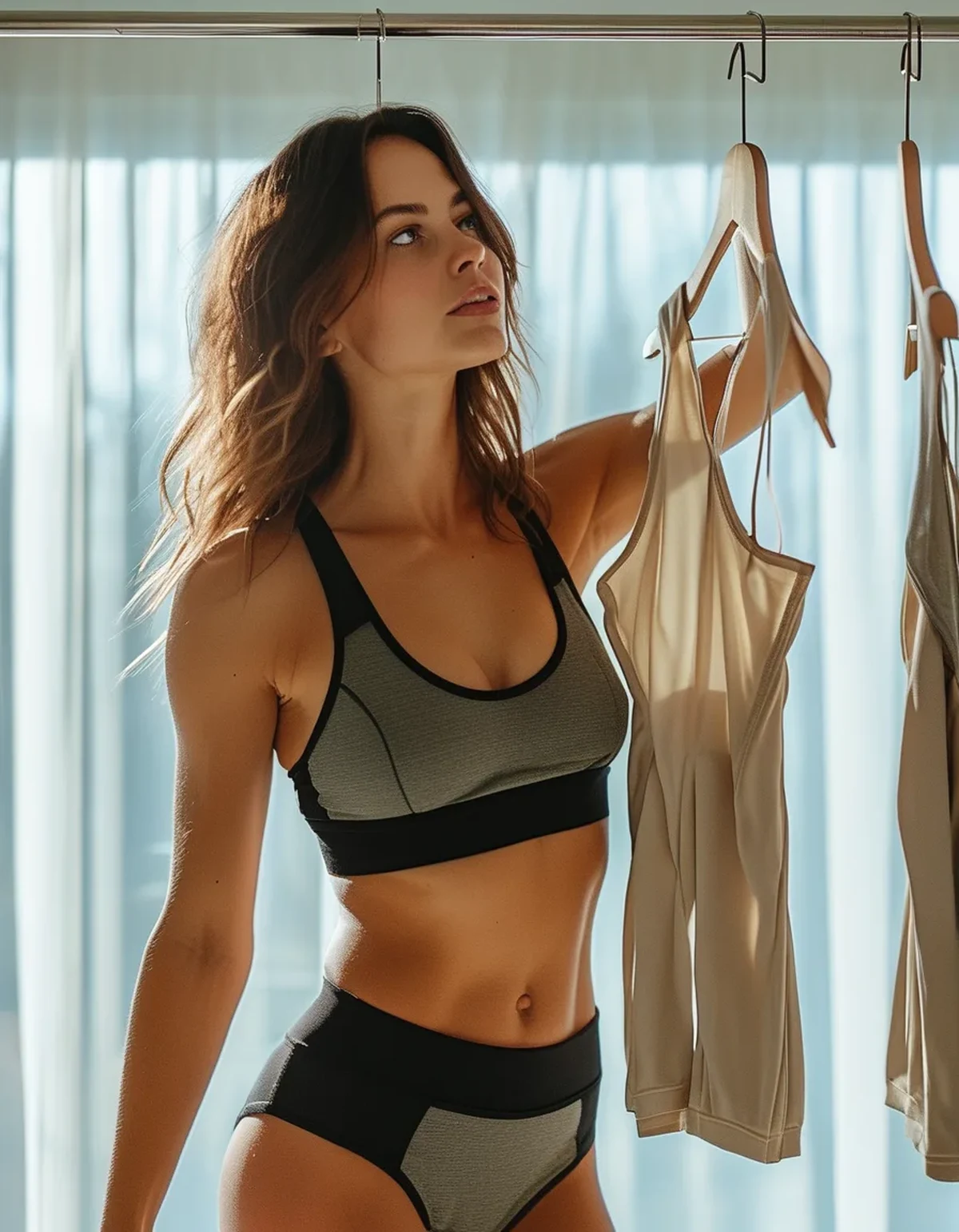
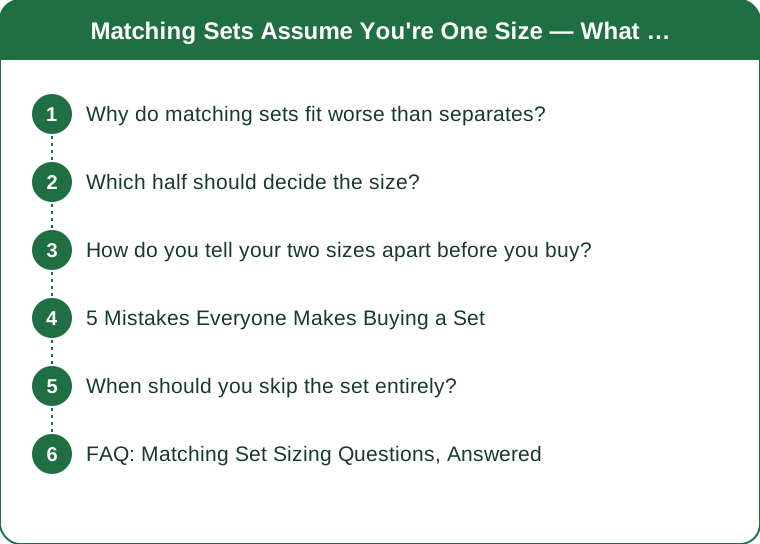
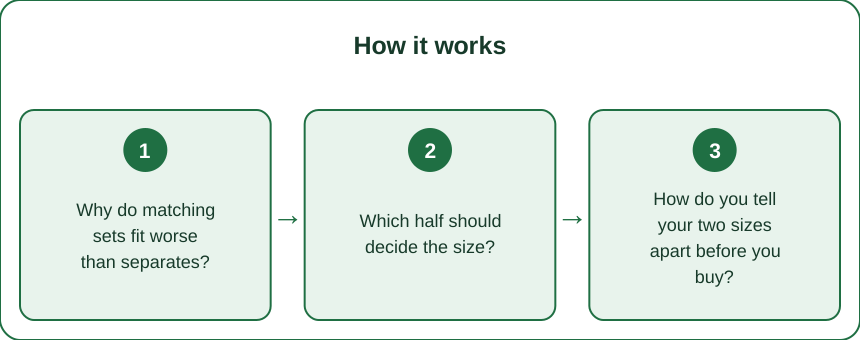
Why do matching sets fit worse than separates?
Because a set is priced and packed as one SKU, brands size it off a single fit model with a proportional figure — roughly the same relative measurement top and bottom. That model exists. Most bodies don’t match her.
Standard grading assumes your bust, waist, and hip step up together at a fixed ratio, usually about 2 inches per size. If your hips step up faster than your bust does, every size in the run is wrong somewhere. You’re not between sizes. You’re between two different sizes at once.
The result is predictable: sets fit best on people whose top and bottom sizes already agree, and those are exactly the people who never had a sizing problem to begin with.
Which half should decide the size?
Size for the bottoms. This isn’t a style preference, it’s a tolerance question.
A legging that’s a size small does visible, uncomfortable things: waistband roll, sheerness at the stretch, seams that migrate, a rise that won’t stay put. A legging that’s a size large slides down every set. Neither is fixable at home.
A top has options. Too big can be tucked, knotted, layered, or simply worn as the relaxed piece it now looks like. Too small on a top is only a problem if it’s a bra-style piece — and that’s the one exception below.
The rule flips when the set’s top is a built-in-bra tank or a genuine support piece. Support depends on band fit, and a band that’s wrong gives you no support at any price. In that case size the top and buy the bottom separately.
How do you tell your two sizes apart before you buy?
Take three measurements with a soft tape, standing relaxed, at the same time of day:
- Underbust, snug — this drives support tops.
- Natural waist, at the narrowest point.
- Fullest hip, feet together.
Now read the brand’s chart for each one separately and write down the size each measurement lands on. If all three say the same size, buy the set and stop reading. If your hip lands two sizes above your underbust, you have your answer about why sets have never worked.
One detail people skip: check whether the chart lists garment measurements or body measurements. Garment measurements already include the intended ease, so comparing your body to them makes everything look a size too small. If the chart doesn’t say, assume body measurements — that’s the more common convention.
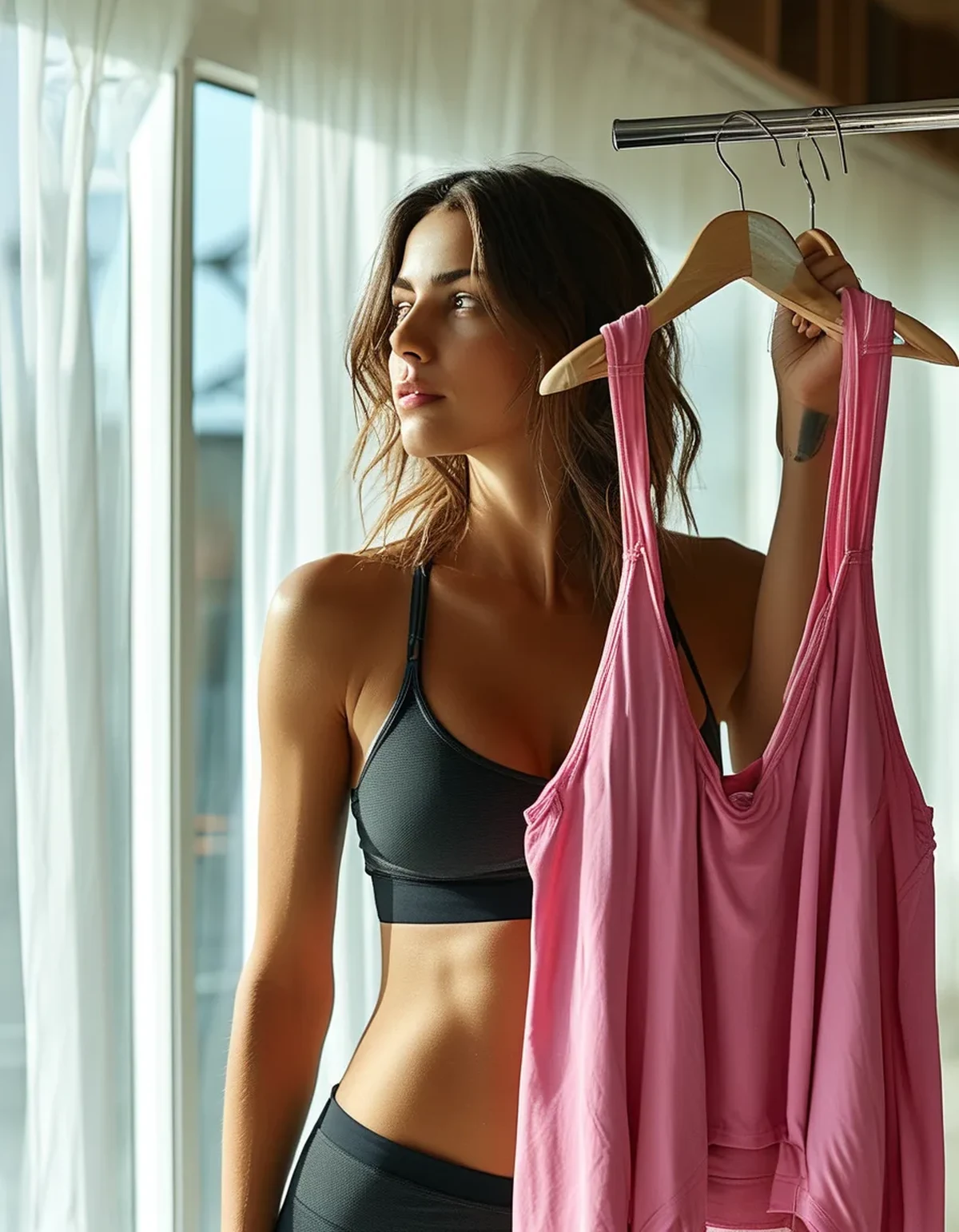
5 Mistakes Everyone Makes Buying a Set
1. Sizing up the whole set to fix the bottoms. Now both halves are wrong instead of one. Size the bottoms correctly and treat the top as a separate problem.
2. Trusting the model photo. She is almost always wearing the sample size and it was pinned at the back. The photo tells you the color, not the fit.
3. Assuming the two halves use the same fabric. Sets frequently pair a thicker compressive bottom with a lighter jersey top. Different fabrics stretch differently, so the same labeled size behaves differently on each piece.
4. Buying a set for a use the top can’t handle. A pretty set with a shelf bra is a walking and pilates set. It is not a running set, and no amount of correct sizing changes that.
5. Ordering one size and hoping. Sets are the single strongest case for ordering two sizes and returning one — the whole point is that two garments have to land at once. The third mistake on this list is the one that fools even experienced shoppers, because the fabric difference is invisible until it’s on.
When should you skip the set entirely?
Skip it when the gap between your top and bottom size is two sizes or more. At that distance, no single size in the run is going to produce a coordinated look — you’ll get one piece that fits and one that reads as borrowed.
Skip it when the set is the only place a color exists and you actually want the color. Most brands sell the same colorway in separates within a season, sometimes at the same total price.
And skip it when the piece you actually need is support. Buying a bra by set size is how people end up with a drawer of tops they only wear under a jacket.
What to do instead: buy the bottoms in your bottom size, then buy a top from the same brand in the same colorway one or two sizes down. Same fabric, same dye lot within a season, and both halves fit. It costs a few dollars more and solves the problem permanently.
FAQ: Matching Set Sizing Questions, Answered
Can I just size the set to my top and take in the leggings?
Not practically. Altering technical fabric means sewing through elastane with the right stretch stitch, and most tailors won’t touch it. A too-large legging also loses the compression that made it worth buying.
Do brands ever sell sets in split sizes?
A few do, usually listed as build-your-own or mix-and-match, and it’s worth searching a brand’s site for that phrase before you assume they don’t. It’s more common than it was two years ago.
My set fit at purchase and doesn’t now — did it shrink?
Probably not shrinkage. Technical fabric relaxes with wear and recovers with washing, so the same set can read loose at the end of a long day and snug straight out of the dryer. Judge fit in the morning on a wash-fresh piece, and if it’s genuinely different in both states, the elastane is worn out rather than shrunk.
TL;DR:
- Sets are graded for a proportional fit model, which is why they fail on most real bodies.
- Size to the bottoms. A loose top reads intentional; a small legging never does.
- Exception: if the top provides real support, size the top and buy bottoms separately.
- Measure underbust, waist, and hip against the chart separately to learn your two sizes.
- A gap of two sizes or more means skip the set and buy matching separates.
The set isn’t a better deal if half of it lives in a drawer. Buying the two pieces separately in the same colorway gets you the same look and two garments you’ll actually wear.
See It in Motion
Seen here: High Waist 8” Yoga Shorts — shop similar styles on bubblelime.com
Keep Reading
This article is for general informational and styling purposes only. Fit, sizing, and product availability may vary.