Why Sizing Up in Leggings Usually Makes the Fit Worse, Not Better
Quick Answer: Sizing up in leggings adds circumference everywhere at once, including the places that already fit. Because a compressive knit stays up by gripping, a larger size grips less, so the waistband migrates, the crotch seam drops, and the fabric bags at the knee - which reads as a worse fit even though the number is more generous. If a single spot digs, the fix is almost always a different rise, a wider band, or a different fabric weight, not a bigger size.
The waistband cut into you, so you ordered the next size up, and now they slide down every time you walk up stairs. That is not bad luck and it is not your body. It is what happens when you solve a pressure problem with a circumference solution.

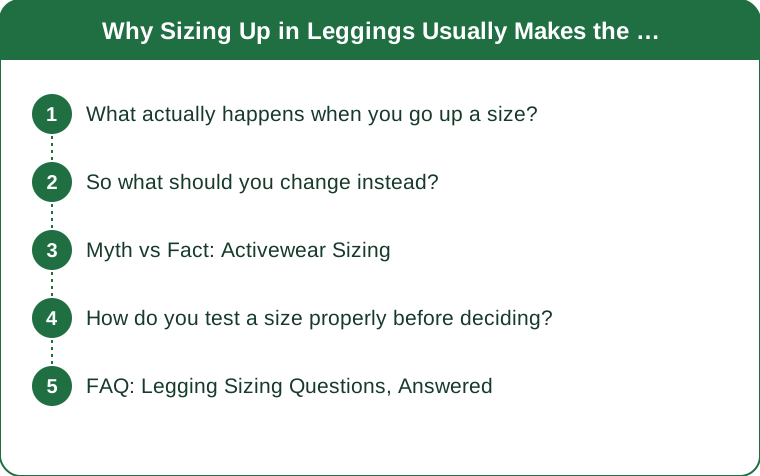
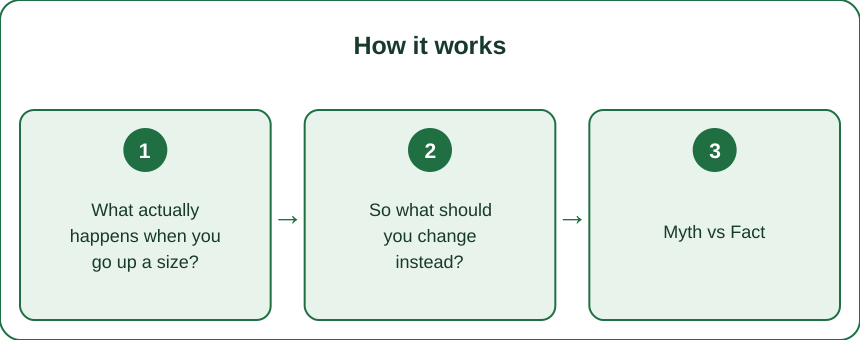
What actually happens when you go up a size?
Grading adds width in every direction, not just where you needed it. Activewear patterns are graded by rule: go up a size and the waist, hip, thigh, knee, calf, and rise all increase together, usually by roughly an inch at the waist and hip and proportionally less further down the leg. If your complaint was one inch too tight at the waistband, you have now also added room at the thigh and knee where the fit was correct.
Compression garments stay up by friction, and friction needs pressure. A legging does not hang from your waist the way woven trousers do - it stays in place because the fabric is stretched slightly against your skin. Reduce that stretch and you reduce the grip, which is why the larger size migrates downward within minutes of moving.
Rise is the sneaky part. Going up a size lengthens the rise, so the crotch seam sits lower. That extra length has to go somewhere, and it collects as a small pouch of fabric that most people read as an unflattering fit issue when it is really a rise-length issue.
And bagging at the knee follows automatically. A knit that is not held under mild tension deforms during repeated flexion and does not spring back cleanly, so the same pair that looked smooth in your normal size develops loose knees by mid-session in the larger one.
So what should you change instead?
Diagnose by location. Where the garment fails tells you which variable to change, and it is rarely the size.
If the waistband digs or rolls, change the rise or the band construction. A band that sits at the narrowest part of your waist has more surface area and less curve to fight; a band that lands mid-abdomen is being pushed by everything below it. A wider band - two and a half inches or more - spreads the same holding force over more skin and simply feels less like a wire. This is the single most common fix, and it costs nothing in performance.
If they slide down, go firmer, not smaller. Look for higher nylon content, a heavier fabric weight, a drawcord, or a silicone gripper strip. Sizing down to fix sliding tends to create waistband roll instead, which is the same problem wearing a different hat.
If the thigh is tight but the waist fits, look at the cut, not the size. Some brands grade with a straighter leg line than others. A style with more thigh ease at the same waist measurement exists in almost every brand’s range - it is often the pocket style or the one described as relaxed.
If they are sheer at the seat, that is fabric weight. No size change fixes sheerness. You need a denser knit, typically 240 to 300 gsm, and squat-testing before you commit.
If your measurements straddle two sizes, follow the hip. The hip is the hardest circumference for a knit to accommodate, and waistbands adapt far more forgivingly than seat and thigh panels do.

Myth vs Fact: Activewear Sizing
Myth: A size up is always more comfortable. Fact: In a compressive knit, more room means less grip, and a garment you are constantly hitching up is not comfortable. Comfort in activewear comes from correct pressure distribution, not from maximum room.
Myth: If it leaves marks on your skin, it is too small. Fact: Temporary elastic marks are normal even in correctly fitted garments, particularly after long wear. Marks that are still visible 30 minutes later, or numbness and tingling at any point, are the actual warning signs.
Myth: You should be able to pinch an inch of fabric anywhere. Fact: That is a woven-garment rule. A performance knit is meant to sit against the skin under mild tension; the pinch test flags a correctly fitted legging as too small every time.
Myth: The size on the label is comparable across brands. Fact: There is no enforced standard for activewear sizing, and grading rules differ by brand and even by product line within a brand. Your measurements are portable, your size number is not.
Myth: The tightest pair gives the most support. Fact: Support comes from fabric structure, panel placement, and appropriate graduated pressure. Beyond a point, more compression restricts hip flexion and makes deep squats and lunges genuinely harder without adding any benefit.
Myth: They will stretch out to fit. Fact: Quality elastane returns to shape rather than relaxing permanently. If a pair is genuinely too small on day one, it will still be too small on day 40 - it will just be more worn.
How do you test a size properly before deciding?
Give it five minutes of movement. Fabric warms toward body temperature and softens slightly in the first few minutes of wear. Judgments made in the first 60 seconds systematically over-report tightness, which is exactly how people end up sizing up unnecessarily.
Run four movements, in this order. A full-depth squat facing away from a mirror - check for sheerness and seat gapping. A deep forward lunge each side - check the waistband stays put. Thirty seconds of jogging in place - count how many times you touch the waistband. A full overhead reach - check the rise does not pull down.
Touching the waistband more than once during the jog is a fail. That is the single most predictive test, and it fails larger sizes far more often than smaller ones.
Check the knee after ten minutes of normal movement. Slight looseness there that was not present at minute one means the size is too generous for that fabric weight, and it will only get more pronounced across a session.
Do it at roughly your training temperature. A cool, still fitting room reports firmer than a warm studio, so a pair that feels marginally snug in a mall in August will often feel correct in a heated class and slightly loose in a cold gym in January.
Keep receipts through the first real session. Ten minutes of trying on tells you about circumference. Only a full workout tells you about migration, chafe points, and how the seams behave under sweat - and those are the things that decide whether a pair gets worn or abandoned.
FAQ: Legging Sizing Questions, Answered
Should I size up if my leggings are too tight at the waist?
Usually no - a larger size adds room everywhere, including the places that fit, and reduces the grip that holds the garment up. Try a higher rise or a wider waistband first, since both spread the same holding pressure over more surface area.
What size do I take if I am between sizes in leggings?
Follow your hip measurement rather than your waist. A knit waistband adapts far more forgivingly than the seat and thigh panels do, so a garment that fits the hip can usually be made comfortable at the waist through rise and band choice.
Why do my bigger leggings slide down?
Compressive knits stay in place through friction created by mild stretch against the skin. A larger size stretches less, grips less, and migrates during movement - which is why sliding is typically a sign of too much room rather than too little.
Do leggings stretch out over time?
Good elastane recovers to its original shape rather than relaxing permanently, though it degrades gradually with heat, chlorine, and fabric softener. A pair that is genuinely too small when new will not become the right size with wear.
TL;DR:
- Sizing up adds circumference everywhere, including where the fit was already correct, and reduces the grip that keeps compressive knits in place.
- Diagnose by location: digging means rise or band width, sliding means firmer fabric or a gripper, sheerness means fabric weight - none of these are size problems.
- Between sizes, follow the hip; waistbands adapt more forgivingly than seat and thigh panels.
- Test with a squat, a lunge, a 30-second jog, and an overhead reach after five minutes of wear, not in the first 60 seconds.
- Touching the waistband more than once during the jog test is the clearest signal that a size is too generous.
The next size up is rarely the answer. Change the rise, the band, or the fabric weight, and the pair you already liked will usually start behaving.
See It in Motion
Seen here: High Waist Yoga Leggings with Inner Pocket — shop it on bubblelime.com
Keep Reading
This article is for general informational and styling purposes only. Fit, sizing, and product availability may vary.