Why the Same Leggings Fit Differently Morning and Evening
Quick Answer: Body volume typically increases through the day - fluid settles into the legs and midsection, and the difference can be enough to change how a waistband and calf feel by evening. Try activewear on at the time of day you will actually train, and if you train at both ends of the day, fit to the evening and accept slightly more room in the morning.
You bought them after work, they felt perfect, and the first 7am session they felt loose at the waist and slid down through every set of squats. Nothing was wrong with the leggings.
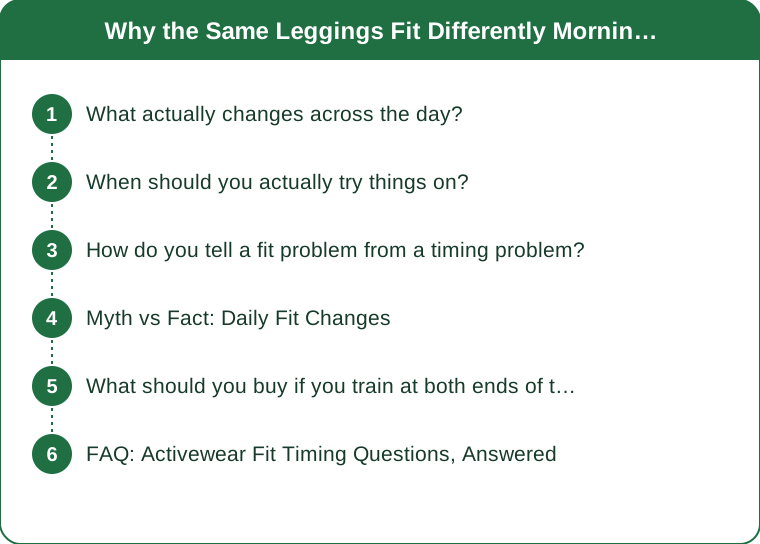
What actually changes across the day?
Fluid distribution, mostly, plus a few smaller effects that stack.
When you are upright, gravity moves fluid gradually into the lower body. Ankles, calves, and to a lesser degree thighs carry more volume in the evening than at wake-up. Overnight, lying flat redistributes it, which is why rings feel loose in the morning and snug at 9pm.
On top of that:
- Digestion adds midsection volume through the day, which the waistband feels directly
- Sodium and heat amplify fluid retention, so a hot late-summer day exaggerates everything
- Training itself temporarily increases muscle volume through blood flow, which is why calves feel fuller straight after a run
- Spinal height drops slightly through the day as discs compress, which changes where a high-rise waistband sits
None of these are large individually. Together, they are enough to move a garment from snug and supportive to tight and digging, or the reverse - and compression fabric makes small changes very noticeable.
When should you actually try things on?
Match the try-on to the use. That is the whole rule, and it solves most of this.
- You train at 6am: try on in the morning if you can. If you cannot, take the evening fit and expect it to feel slightly roomier at dawn. Choose a waistband with real structure rather than a soft roll-over.
- You train after work: try on in the evening, and do not be alarmed when they feel loose on a Sunday morning.
- You train at both ends: fit to the evening. A garment that is slightly loose in the morning is annoying; one that is too tight in the evening is unwearable, and you will stop reaching for it.
The single worst time to buy is straight after a session. You are warm, temporarily fuller, and everything compressive feels good against skin. That is the state in which people size down and regret it three days later.
How do you tell a fit problem from a timing problem?
Do the two-window check before you blame the garment.
Wear the piece for twenty minutes on a morning and note three things: waistband slippage during a hinge, calf feel, and whether the back rise stays put when you squat. Do exactly the same thing in the evening.
If the difference is meaningful across the two windows, it is timing, and the fix is choosing which window to optimise for.
If it feels the same at both and still wrong, it is a genuine fit issue - and the specific symptom tells you which one:
- Waistband rolls down at the front regardless of time: rise is too low for your torso, or the band is too soft
- Digs at one point only: shape mismatch, not size
- Slides down through squats at both times: waistband elastic has lost recovery, or the size is genuinely too large
- Seam sits oddly at the knee at both times: inseam length is wrong for you
Sizing up for a problem that is actually shape or rise is the most common misdiagnosis in this whole category.

Myth vs Fact: Daily Fit Changes
Myth: If they feel tight in the evening, you have gained weight. Fact: Day-to-day and hour-to-hour volume shifts are mostly fluid and digestion. A garment feeling different between morning and evening tells you nothing useful about body composition, which changes far too slowly to show up between breakfast and dinner.
Myth: Good compression fabric fits identically all day. Fact: Better fabric has more recovery, so it adapts rather than staying stretched - but it still responds to what is underneath it. Consistency of feel is a fabric quality; immunity to your body is not a thing.
Myth: Sizing up solves evening tightness. Fact: It solves it at 8pm and creates slippage at 7am. If the fit is only wrong at one end of the day, the answer is usually a structured waistband or a different rise, not a different number.
Myth: Late-summer heat has no effect. Fact: Warm weather increases fluid retention noticeably. The leggings that fit in October may genuinely feel tighter through an August heatwave, and then settle again as the weather turns.
What should you buy if you train at both ends of the day?
Prioritise pieces that tolerate a range rather than pieces that nail one point.
Look for a wide, structured waistband - roughly three inches or more, with its own elastic or bonded construction. Wide bands distribute pressure over more area, so a small volume change is spread out instead of concentrated into one digging line.
Favour mid-range elastane, around 16 to 22 percent. Very low elastane relaxes too much by evening; very high compression has the least tolerance for a fuller evening state.
Skip drawstrings as your main solution but do not dismiss them - on a jogger or a short, an internal drawcord genuinely gives you two fits in one garment.
Avoid a snug elastic hem at the calf if evening volume is where you feel it most. A plain bonded or raw-edge hem accommodates change far better than a gripper band.
One well-chosen structured piece will serve both windows better than two pieces bought at two different times of day.
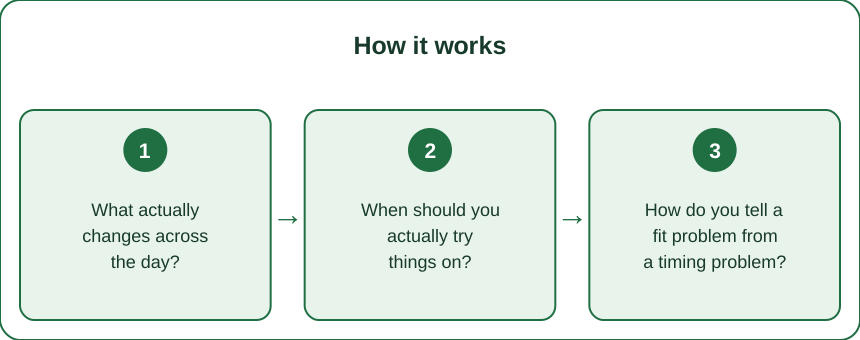
FAQ: Activewear Fit Timing Questions, Answered
Should I measure myself in the morning or evening?
Measure in the morning for a stable baseline, then remember that your evening measurement will be slightly larger. If a size chart puts you between sizes on the morning number, you are likely a comfortable fit in the larger size by evening.
Does this affect sports bras too?
Less than bottoms, since the effect is mostly lower body, but the ribcage band can feel different after a large meal or on a hot day. Band tightness complaints that only occur in the evening are usually this rather than a sizing error.
Is evening swelling something to worry about?
Mild, symmetrical, end-of-day puffiness that resolves overnight is ordinary. Swelling that is sudden, one-sided, painful, or does not settle by morning is worth raising with a healthcare professional. This is general information, not medical advice.
Why do new leggings feel tighter than the same pair I have owned for a year?
Old leggings have lost some elastane recovery, so they sit permanently more relaxed. You are not comparing to how the old pair fitted when new - you are comparing to a stretched-out version of it.
TL;DR:
- Body volume rises through the day from fluid, digestion, and heat - compression fabric makes it obvious
- Try activewear on at the time of day you actually train
- Training at both ends? Fit to the evening; slightly loose in the morning beats too tight at night
- Never buy straight after a workout - you will size down and regret it
- Wide structured waistbands and mid-range elastane tolerate the daily swing best
Most of the time, leggings that feel like two different garments are not defective and not the wrong size. They are being judged at two different points on a curve your body runs every single day. Pick the point that matters for your training and buy for that one.
See It in Motion
Seen here: High Waist Yoga Leggings with Inner Pocket — shop it on bubblelime.com
Keep Reading
This article is for general informational and styling purposes only. Fit, sizing, and product availability may vary.