How Activewear Should Fit, Garment by Garment
There is no single rule for how activewear should fit, because a sports bra, a legging and a training top are each solving a different problem — and applying one standard to all three is how people end up uncomfortable in everything. Here is why the rules differ, the standard for each piece, and how to check.
Why Fit Rules Differ by Garment
Different jobs, different fits: the the-each-garment-solves-a-problem (the each piece having a distinct job from the sizing-decoded logic — the different-problems), the the-support-versus-freedom (the some pieces needing to hold, others to let you move from the compression-vs-relaxed logic — the support-vs-freedom), the the-one-standard-fails-all-three (the applying a single fit rule making everything uncomfortable from the sizing-decoded logic — the one-standard-fails), the the-your-size-varies-by-piece (the your correct size differing between garments from the between-sizes logic — the size-varies), the the-the-activity-changes-the-answer (the the intended activity changing the right fit from the compression-vs-relaxed logic — the activity-changes-it), and the reframe (the activewear fit as garment-specific — a bra, a legging and a top solving different problems, so one standard applied to all three leaves you uncomfortable in everything).
The Fit Standard for Each Piece
Piece by piece: the the-sports-bra-snug-not-restrictive (the a bra snug enough to limit movement but not to restrict breathing from the sports-bra-size logic — the bra-fit), the the-leggings-second-skin-no-digging (the leggings sitting like a second skin without digging or sliding from the sizing-decoded logic — the legging-fit), the the-the-waistband-stays-put (the a waistband that stays put through a full squat from the sizing-decoded logic — the waistband-fit), the the-training-tops-room-to-move (the tops allowing full shoulder movement from the compression-vs-relaxed logic — the top-fit), the the-compression-firm-and-even (the compression pieces firm and even, never pinching from the compression-vs-relaxed logic — the compression-fit), the the-shorts-no-ride-up (the shorts with enough inseam and grip not to ride from the sizing-decoded logic — the shorts-fit), the the-relaxed-pieces-still-need-a-shape (the relaxed pieces still needing deliberate proportions from the compression-vs-relaxed logic — the relaxed-fit), and the the-length-matters-as-much-as-width (the inseam and torso length mattering as much as girth from the petite-tall logic — the length-matters).
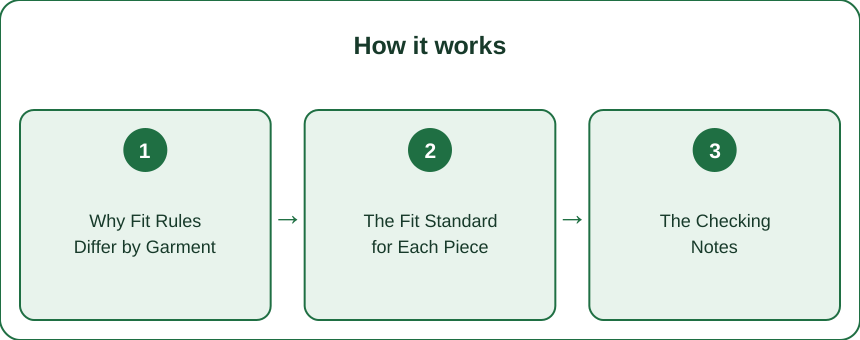
The Checking Notes
Testing the fit properly: the the-squat-test (the a full squat testing opacity and waistband hold from the sizing-decoded logic — the squat-test), the the-move-the-way-you-train (the testing the actual movements you do from the compression-vs-relaxed logic — the move-as-you-train), the the-check-after-five-minutes (the checking whether it shifts after some movement from the sizing-decoded logic — the check-after-moving), the the-no-digging-or-red-marks (the no digging, pinching or lasting marks from the sizing-decoded logic — the no-digging), the the-size-per-garment-not-per-brand (the sizing each garment individually from the between-sizes logic — the per-garment), the the-check-the-brand-size-chart (the reading each brand’s own chart from the online-sizing logic — the brand-chart), the the-when-between-sizes-decide-by-purpose (the letting the garment’s job break the tie between sizes from the between-sizes logic — the purpose-breaks-the-tie), and the frame (the activewear fit as garment-specific standards — a snug bra, second-skin leggings, mobile tops — verified with a squat test and real movement — garment by garment. Apply a different standard to each piece, run the squat test, move the way you actually train, and size per garment rather than per brand).
There is no single rule for how activewear should fit, because a sports bra, a legging and a training top are each solving a different problem — and applying one standard to all three is how people end up uncomfortable in everything. The rules differ because each garment solves a problem, some need support and others freedom, one standard fails all three, your size varies by piece, and the activity changes the answer. The standards: a sports bra snug not restrictive, leggings like a second skin without digging, a waistband that stays put, training tops with room to move, compression firm and even, shorts that do not ride up, relaxed pieces that still have shape, and length mattering as much as width. Check with the squat test, moving the way you train, checking after five minutes, no digging or red marks, sizing per garment, reading the brand chart, and deciding by purpose when between sizes. Garment by garment.
See It in Motion
Seen here: High Waist Embossed Yoga Leggings with Side Pockets — shop it on bubblelime.com
Keep Reading
This article is for general informational and styling purposes only. Fit, sizing, and product availability may vary.