What the Fabric Label Tells You About Fit Before You Try Anything On
Quick Answer: Three numbers on the label predict fit: elastane percentage (20-28% means compression and true-to-size or size-down; under 15% means it will relax, so size up if between), fabric weight in gsm (under 200 is lightweight and sheer-prone, 240-320 is the sweet spot for opacity), and the knit type (nylon blends run firmer than polyester blends at the same elastane). You can read all three before you find the fitting room.
Online, you can’t do the stretch test. In a busy shop, you don’t want to. The label is the shortcut - it just isn’t written in a language most people were taught to read.

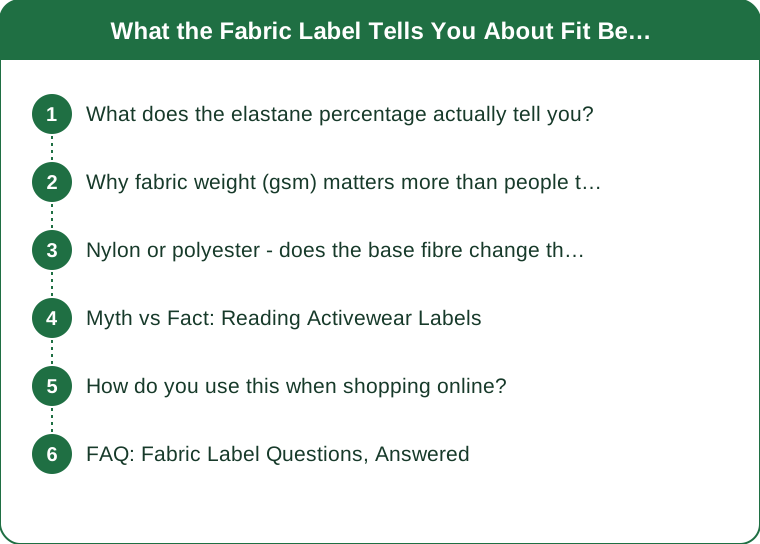
What does the elastane percentage actually tell you?
It tells you how much the garment will hold you versus how much it will follow you.
Elastane, spandex, and Lycra are all the same fibre under different names. The percentage is the single most predictive number on the label:
- Under 10%: minimal shape retention. Fine for a relaxed jogger, poor for leggings. Expect noticeable bagging at the knee by hour three.
- 10-15%: soft, comfortable, low compression. This is most buttery-soft leggings. Size up if you’re between sizes - the fabric relaxes into a working size after twenty minutes.
- 16-22%: the general-purpose band. True to size for most people, holds shape through a full session.
- 23-30%: genuine compression. Firm, supportive, minimal relaxation. Size down if between sizes, because what you feel is what you get.
The catch: percentage alone isn’t the whole story, because the same 20% elastane knitted loosely feels nothing like 20% knitted tight. That’s what the weight number is for.
Why fabric weight (gsm) matters more than people think
Grams per square metre tells you how much fabric is actually there, and it’s the number that predicts squat-test opacity.
- Under 200 gsm: lightweight. Excellent for hot-weather running, breathable, packs small. Higher sheer risk under stretch - this is where most see-through complaints come from, and no amount of sizing up fully fixes it.
- 200-240 gsm: mid-light. Comfortable year-round, usually opaque in solid dark colours, can go sheer in pale ones.
- 240-320 gsm: the reliable zone for opacity and structure. Most well-reviewed everyday leggings sit here.
- Above 320 gsm: heavy and warm. Great for cold-weather training and lifting, genuinely uncomfortable in a hot studio.
Not every brand publishes gsm. When they don’t, the description usually gives it away: lightweight, featherweight, and barely there map to the sub-200 group; sculpting, high-support, and opaque map to 240 and up.
Pairing rule: high elastane with low gsm is the combination most likely to disappoint - it’s stretchy enough to thin dramatically and light enough to go sheer when it does.
Nylon or polyester - does the base fibre change the fit?
Yes, and this is the part almost nobody accounts for.
Nylon (polyamide) blends feel smoother and denser, and they compress more at the same elastane percentage. Nylon also has better abrasion resistance, which is why it dominates squat-proof and sculpting lines. It absorbs slightly more moisture than polyester, so it holds sweat a little longer.
Polyester blends feel drier and lighter, wick faster, and cost less to produce. At the same elastane number, a polyester blend generally feels less firm than a nylon one. It’s the standard for running and high-sweat training.
What this means in practice: if you know your size in a nylon-blend legging with 22% elastane, the same size in a polyester blend at 22% will feel looser, not identical. Treat fibre base as roughly a third of a size.
A useful shorthand: if the label reads nylon or polyamide first with 20%+ elastane, expect firm and true-to-size. If it reads polyester first with the same elastane, expect a touch more give.

Myth vs Fact: Reading Activewear Labels
Myth: More elastane always means more support. Fact: Support comes from elastane and density together. High elastane in a thin, loosely knit fabric stretches easily and supports poorly.
Myth: Cotton blends are more comfortable for workouts. Fact: Cotton is comfortable dry and miserable wet. It absorbs many times its weight in moisture, holds it against skin, and stretches out permanently once soaked. A small cotton percentage in a lounge piece is fine; in training bottoms it’s a downgrade.
Myth: The care label doesn’t affect fit. Fact: It predicts fit over time. A garment rated for tumble drying still loses elastane recovery in heat. The pieces that stay true to size longest are the ones you cold wash and hang dry, regardless of what the label permits.
Myth: Recycled fabrics fit differently. Fact: Recycled nylon and polyester behave essentially like virgin fibre in fit and recovery. The environmental difference is real; the fit difference isn’t.
Myth: If two garments have the same composition, they’ll fit the same. Fact: Composition doesn’t capture knit gauge, panel construction, or waistband engineering. It narrows the guess considerably - it doesn’t eliminate it.
How do you use this when shopping online?
Build a two-line note for every purchase and you’ll get sharper each order.
Before you order, capture: brand, style, composition percentages, gsm if listed, and the size you chose. After four wears, add one word: right, tight, or loose.
After six or seven entries a pattern appears that no size chart will give you - something like I take a medium in nylon blends above 20% elastane and a large in soft polyester blends. That single sentence is worth more than every brand size guide you’ll ever read.
Two more online-specific tactics:
- Filter reviews for your failure mode. Search the reviews for waistband, sheer, or rolls, not for general star ratings. The people who mention your specific problem are the useful sample.
- Check the model’s stated size and height. A brand listing model is 5’9 wearing size S is telling you the garment is long-cut. That’s length information the size chart usually leaves out.
As the season turns, expect to move up in gsm and stay put in size - warmer fabrics are thicker, not bigger.
FAQ: Fabric Label Questions, Answered
What does compression actually do?
Graduated compression can modestly reduce muscle oscillation and perceived soreness. Most activewear labelled compression is compressive in feel rather than medically graduated - it’s a fit description, not a therapeutic claim.
Does a higher elastane number mean the leggings will last longer?
No - elastane is usually the first fibre to fail. A higher percentage means more of the thing that degrades. Care matters more than composition for lifespan.
What’s a good composition for a sports bra?
Similar logic: nylon-forward with 15-25% elastane for the band, which does most of the support work. Beware very low elastane in a band - it will stretch out within months.
Should I avoid see-through risk by always buying black?
Dark colours hide thinness better, but they don’t fix it. A sub-200 gsm black legging still goes sheer under full stretch - it just takes a brighter light for someone to notice.
TL;DR:
- Elastane under 15% relaxes (size up); 23%+ compresses and holds (size down if between)
- 240-320 gsm is the reliable zone for opacity; under 200 carries real sheer risk
- Nylon-first blends run firmer than polyester-first at the same elastane - about a third of a size
- High elastane plus low gsm is the most disappointing combination on the market
- Log composition and outcome for four or five purchases and your own fit rule appears
The size chart describes your body, which you already know. The fabric label describes the garment’s behaviour, which is the actual unknown. Ten seconds on the composition line removes most of the guesswork before you’ve even opened the fitting room door.
See It in Motion
Seen here: High Waist Yoga Leggings with Side Pockets — shop it on bubblelime.com
Keep Reading
This article is for general informational and styling purposes only. Fit, sizing, and product availability may vary.