Between Two Sizes in Leggings? Here's How to Pick, by Fabric Type
Quick Answer: When you’re between two legging sizes, size down for high-compression fabrics with strong recovery, and size up for buttery soft or brushed fabrics with weaker recovery. The deciding factor is how much the fabric relaxes after 20 minutes of wear - compression knits barely move, soft knits can loosen by most of a full size.
The fitting room lies to you, and it lies in a predictable direction. Leggings are at their tightest in the first two minutes and at their most honest around minute twenty. Here’s how to read which way yours will go.
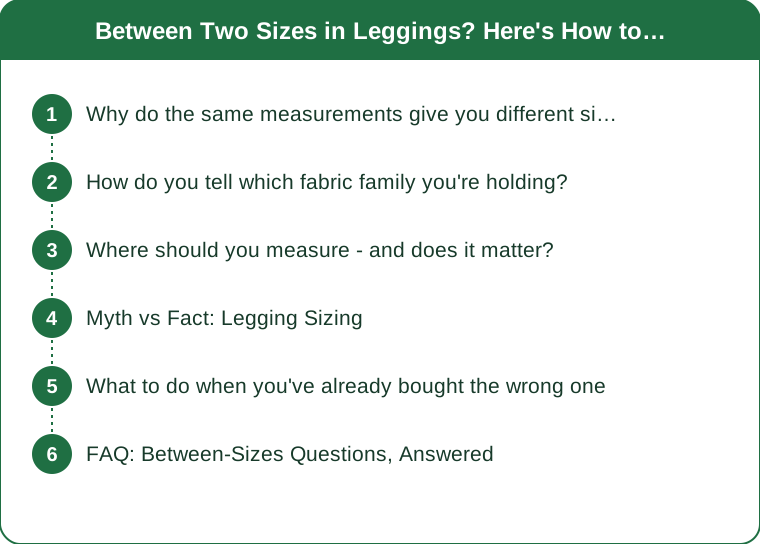
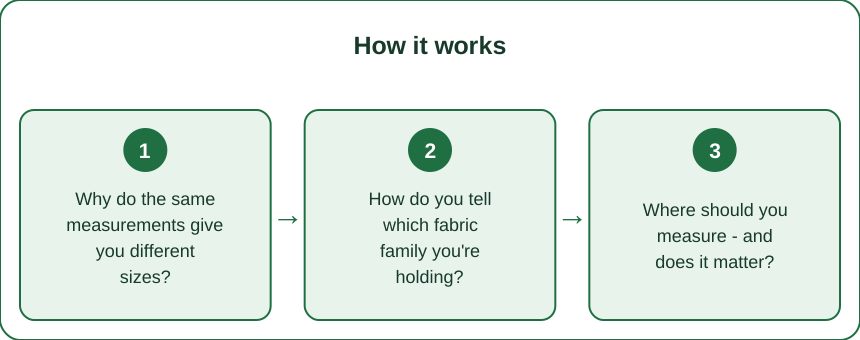
Why do the same measurements give you different sizes?
Because legging size charts describe the body, and legging fit is decided by the fabric.
Two pairs with identical size charts can fit a full size apart depending on stretch percentage and recovery - recovery being the fabric’s ability to snap back to its original dimensions after being stretched.
- High-compression knits (higher elastane, tighter gauge) stretch less and recover almost fully. What you feel in the fitting room is close to what you’ll feel at hour three.
- Brushed or “buttery” knits (softer hand, lower elastane, often thicker) stretch generously and recover slowly. They can feel perfect at minute one and loose at minute forty.
This is why the advice “always size down in leggings” ruins some purchases and saves others. It’s fabric-specific advice being repeated as universal advice.
The practical version: identify which of the two families you’re holding, then apply the matching rule below.
How do you tell which fabric family you’re holding?
You can do this in the shop in about fifteen seconds, without a label.
The stretch-and-hold test. Pull a section of the waistband horizontally as far as it comfortably goes, hold for five seconds, and release. Watch the fabric.
- Snaps back immediately and completely → high recovery. Size down if between.
- Returns slowly, or stays slightly wavy for a second → lower recovery. Size up if between.
The opacity test doubles as a sizing test. Stretch the fabric over your hand. If it goes noticeably sheer under moderate stretch, that pair is already near its limit at your smaller size - and sizing down will make it sheer in a squat. This matters more than comfort, because you’ll only find out in a class.
The thickness shortcut. Thicker and softer usually means lower recovery. Thinner and smoother usually means higher. It’s not universal, but it’s right more often than it’s wrong.
If you’re shopping online and can’t test, the label helps: elastane or spandex at 20-28% generally means compression and high recovery. Below about 15% usually means it will relax.
Where should you measure - and does it matter?
It matters more than the number on the chart.
Most brands size leggings from the hip measurement, but the piece that decides comfort is the waistband, and waistband circumference doesn’t scale with hip size at the same rate across brands. That mismatch is exactly why you end up between sizes in the first place.
Measure three places and compare all three to the chart:
- Natural waist - the narrowest point, usually just above the navel
- High hip - where a high-rise waistband actually sits, about 8cm below the natural waist
- Full hip - the widest point
If your waist maps to the smaller size and your hip to the larger, go with the hip and accept a slightly loose waistband on a compression fabric - the band will grip. If it’s the reverse, the waistband will be your problem all day, and that’s the measurement to prioritise.
Measure at the end of the day, standing, over the underwear you’d actually train in. Morning measurements taken over nothing are consistently a bit optimistic.
Myth vs Fact: Legging Sizing
Myth: Sizing down gives you more compression and support. Fact: On a low-recovery fabric, sizing down gives you a stretched-thin panel that goes sheer and loses support faster. Compression comes from the fabric’s construction, not from stretching a soft fabric harder.
Myth: If they roll down, they’re too big. Fact: Rolling is more often a rise mismatch than a size problem. A waistband sitting at the wrong point on your torso will roll in your correct size and roll in one size smaller too.
Myth: A squat test in the fitting room settles it. Fact: The squat test settles opacity, not sizing. Do it - but do it after you’ve had the leggings on for a few minutes, because fabric that’s been warmed and stretched behaves differently from fabric straight off the hanger.
Myth: Your size is your size across a brand. Fact: Within a single brand, a compression line and a soft line will often need different sizes. Brand loyalty doesn’t transfer across fabric families.
Myth: Leggings that feel slightly tight will stretch out to fit. Fact: True for soft knits, false for compression knits. On a high-recovery fabric, slightly tight at minute one is slightly tight at month six.
What to do when you’ve already bought the wrong one
Before you write them off, check which failure you actually have - two of the three are fixable.
Too loose at the waist, fine at the leg. Often solved by wearing them higher than you’re wearing them now, or by choosing them for lower-intensity sessions where the band isn’t fighting movement. Not fixable by washing.
Too tight everywhere, soft fabric. Wear them three or four times before deciding. Soft knits genuinely relax into their working size, and the first wear is not representative. Many pairs judged “too small” on day one are correct by wear four.
Too tight everywhere, compression fabric. This one won’t change. Return it if you still can.
Going sheer in a squat. Not a fit problem you can solve at home - the fabric is beyond its comfortable stretch at your size. Size up or change styles.
One genuinely useful habit: keep a note in your phone of brand, style, size, and whether it was right. Sizing between brands is unpredictable enough that memory alone can’t do it, and the note pays for itself the second time you order.
FAQ: Between-Sizes Questions, Answered
Does washing change legging size?
Washing doesn’t shrink modern activewear meaningfully, but heat does damage elastane, which reduces recovery - so hot washes and tumble drying make leggings looser over time, not tighter. Cold wash, hang dry.
Should I size differently for 7/8 versus full length?
No, the circumference sizing is the same. But shorter lengths sit differently at the calf, and a pair that felt snug at the ankle may feel fine at 7/8 in the same size.
What if I’m between sizes and pregnant or postpartum?
Size for your current measurements, not aspirational ones, and prioritise the waistband above all else. Fit changes week to week in both directions, which is why this is one case where a slightly forgiving fabric beats a precise one.
Is it worth ordering both sizes?
If returns are free, yes, and it’s the fastest way to learn a brand’s fit. Try both on the same evening, at the same time of day, and keep the one that’s still comfortable after twenty minutes.
TL;DR:
- Compression fabric with fast recovery: size down when between
- Soft, brushed, or low-recovery fabric: size up when between
- Test recovery by stretching the waistband and watching how fast it returns
- Prioritise waistband fit over hip fit when the two disagree
- Judge soft knits at wear four, not wear one; judge compression knits at minute one
Being between sizes isn’t a body problem, it’s a fabric problem. Once you can tell the two families apart by feel, the question answers itself in the shop instead of three weeks later.
See It in Motion
Seen here: High Waist Yoga Leggings with Inner Pocket — shop it on bubblelime.com
Keep Reading
This article is for general informational and styling purposes only. Fit, sizing, and product availability may vary.