Why the Same Leggings Fit Differently Week to Week (It Is Not the Leggings)
Quick Answer: Most menstruating women swing measurably in waist and bust circumference across a cycle - commonly around an inch at the waist and up to a cup at the bust in the late luteal and early period days, driven by fluid retention and breast tissue changes rather than fat gain. That is enough to move a mid-rise waistband from comfortable to digging and a sports bra band from supportive to punishing, using the exact same garment. Buy for the wider end of your range, keep one adjustable option, and stop auditing your body on the tightest day of the month.
You own one pair of leggings. Some weeks they are the best purchase you ever made and some weeks they feel like a compression sleeve with opinions. Nothing is wrong with the leggings, and nothing is wrong with you - you are just sizing a moving target and measuring it on random days.
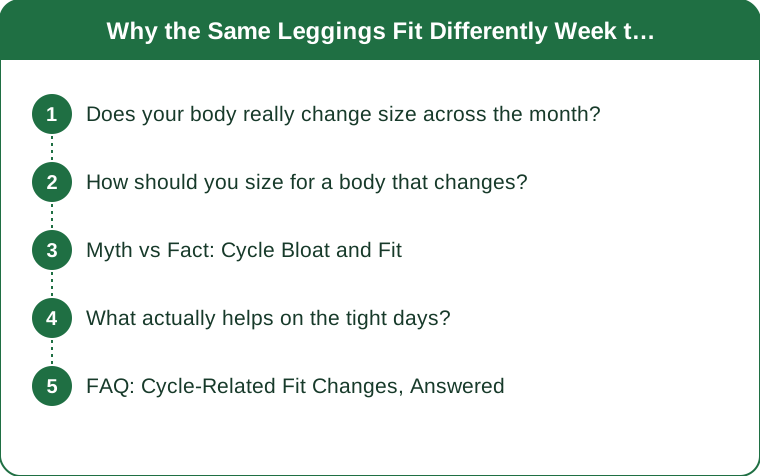
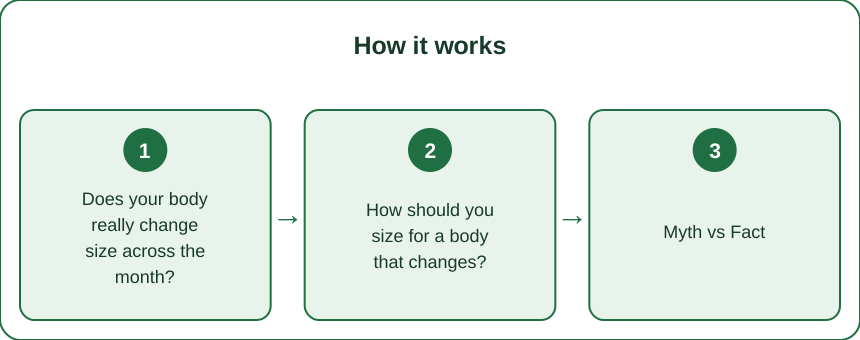
Does your body really change size across the month?
Yes, measurably, and more than most size charts allow for. The dominant driver is fluid, not fat. In the late luteal phase - the week or so before a period - shifting progesterone and estrogen change how the body handles sodium and water, and the result is a genuine increase in circumference at the waist, hips, breasts, and often the ankles and fingers.
The typical magnitude is exactly the annoying amount. Around an inch at the waist is common; some women see more, some barely notice. An inch is small enough that nobody can see it and large enough to move you across a size band on a chart, which is why the same pair of leggings can feel like two different garments.
Breast tissue moves on its own schedule. Cyclical breast swelling and tenderness peak in the days before a period, and a band that fits at day 8 can be actively uncomfortable at day 26. This is the number one reason women think a sports bra shrank in the wash.
Digestion contributes a separate bulge. Progesterone slows gut transit, so the pre-period bloat is often part fluid, part genuinely fuller intestines. It sits low on the abdomen, exactly where a mid-rise waistband lands.
And training adds a temporary layer. Muscle holds extra water and glycogen after hard sessions, and a heavy lower-body week reliably makes leggings snug for 48 hours afterward. Stack that on a luteal week and you have the tightest day of your month by a wide margin.
How should you size for a body that changes?
The goal is a wardrobe that works at both ends of the range, without owning two of everything.
Measure twice, at both extremes. Take your waist, hip, and underbust measurements once in the week after your period ends and once in the three days before it starts. The difference is your personal range - and it is the single most useful number in your sizing life. Some women find a half inch; some find two.
Buy bottoms for the wider end of the range. A waistband that is slightly relaxed on day 8 is a non-issue; a waistband that digs on day 26 gets abandoned. If you are between sizes on a chart, this is the tiebreaker.
Prioritize wide, high, soft waistbands. A four-inch band distributes pressure over more surface area than a two-inch one, so the same circumference change registers as less discomfort. Bands with a real drawcord are even better because they adjust in both directions.
For sports bras, buy the band for the wider end and check the hooks. A band on the loosest hook at day 8 gives you two tightening options later in the cycle - a bra bought on the tightest hook has nowhere to go when your rib cage swells.
Keep one deliberately relaxed set. Not for aesthetics - for function. A looser short, a relaxed tank, and a bra with more give turn the two or three hardest days into normal training days instead of skipped ones.
And time your try-ons. Trying on and returning activewear during your pre-period week produces a wardrobe sized for your largest days, which is uncomfortable for the other three weeks. Mid-cycle try-ons produce the opposite error. If you can, shop in the week after your period and size up one notch on anything with a firm band.

Myth vs Fact: Cycle Bloat and Fit
Myth: If leggings feel tighter, you gained weight. Fact: A one to five pound swing across a cycle is overwhelmingly water and gut content. Fat gain does not arrive in three days and leave in four.
Myth: Compression leggings will hide the bloat. Fact: Firm compression on a bloated abdomen usually increases discomfort and can worsen the feeling of pressure. Softer, higher-rise, wider-band styles do a better job during those days.
Myth: Drinking less water reduces water retention. Fact: Backward. Under-drinking prompts the body to hold on to more fluid. Steady hydration plus attention to sodium extremes and enough potassium-rich food does more than restriction.
Myth: You should just size up for the whole month. Fact: A pair that fits at your widest but slides at your narrowest fails the stay-up test for three weeks out of four. Size up specifically where the band is firm and the rise is low; keep your normal size in high-stretch, drawcord, and relaxed styles.
Myth: This affects everyone the same way. Fact: The range varies enormously between individuals, and hormonal contraception, perimenopause, and cycle irregularity all change the pattern. Your two measurements matter more than any general rule.
What actually helps on the tight days?
Move the waistband above the bloat. A high-rise that sits at the natural waist clears the low abdominal fullness entirely, while a mid-rise lands directly on it. This is the single most effective swap, and it costs nothing if you already own both.
Choose the softer fabric, not the stronger one. Save the maximum-compression pair for a mid-cycle week. Buttery, high-elastane knits with a lower compression rating are the ones that feel supportive rather than restrictive when you are already tender.
Let the top do the work. A relaxed tank or a slightly oversized tee removes the visual concern that makes people avoid training on those days, and it changes nothing about the workout.
Loosen the bra band one hook, do not tighten it. Cyclical breast tenderness responds better to slightly less band tension plus a fuller cup coverage. A bra that is grinding your rib cage on day 27 is the reason those sessions get skipped.
Skip the weigh-in and the progress photo. Everything about the late luteal phase is designed to produce a misleading number and a misleading mirror. Take your measurements and photos in the same week each month - the week after your period is the most consistent baseline available.
Track it once. Three months of noting how your fit feels alongside your cycle day turns a monthly mystery into a predictable, plannable pattern. Most women who do this stop interpreting the tight days as a personal failure within one cycle.
FAQ: Cycle-Related Fit Changes, Answered
How much can your waist actually change during your cycle?
Around an inch is common in the days before a period, with some women seeing very little and others more. It comes from fluid retention and slowed digestion, not fat, and typically resolves within a few days of a period starting.
Should I buy activewear in a bigger size to allow for bloating?
Size up on anything with a firm, low, or narrow waistband, and stay at your normal size in high-stretch styles with wide bands or drawcords. Measure yourself at both ends of your cycle once - your personal range decides this, not a general rule.
Why does my sports bra feel too tight before my period?
Cyclical breast swelling and tenderness peak in the premenstrual days, and rib cage circumference can shift too. Buy bands that fit on the loosest hook when you are at your smallest so you have room to adjust later in the month.
When is the best time to try on activewear?
The week after your period ends is the most consistent baseline, but size up one notch on any firm-banded item so it still works at your widest. Trying on during your premenstrual week produces a wardrobe that is loose for three weeks out of four.
TL;DR:
- Cycle-related fluid retention and slowed digestion commonly change waist circumference by around an inch and breast size by up to a cup - the same garment genuinely fits differently.
- Measure yourself at both cycle extremes once; that range is the most useful sizing number you will ever have.
- Buy firm-banded bottoms and bra bands for the wider end, and use high-rise plus softer fabric on tight days.
- Do not weigh, photograph, or judge fit in the premenstrual week - it is the least representative measurement of the month.
- Track fit against cycle day for three months and a monthly mystery becomes a predictable pattern.
Your leggings did not shrink and you did not fail. You have been sizing a body that legitimately changes and grading it on the hardest day of the month - so measure your range, dress for both ends, and let the calendar explain the rest.
See It in Motion
Seen here: Super High Waist Embossed Yoga Leggings with Inner Pocket — shop it on bubblelime.com
Keep Reading
This article is for general informational and styling purposes only. Fit, sizing, and product availability may vary.